Please fill out the form below to request a quote or to request more information about us. please be as detailed as possible in your message, and we will get back to you as soon as possible with a response. we're ready to start working on your new project, contact us now to get started.
Yingshang-OEM & ODM CNC Machining Services Manufacturer Provide CNC Machining Parts & Skincare Tools.
How Stainless Steel Is Used In Premium Skin Care Tool Manufacturing
2026-10-29
YINGSHANG
33
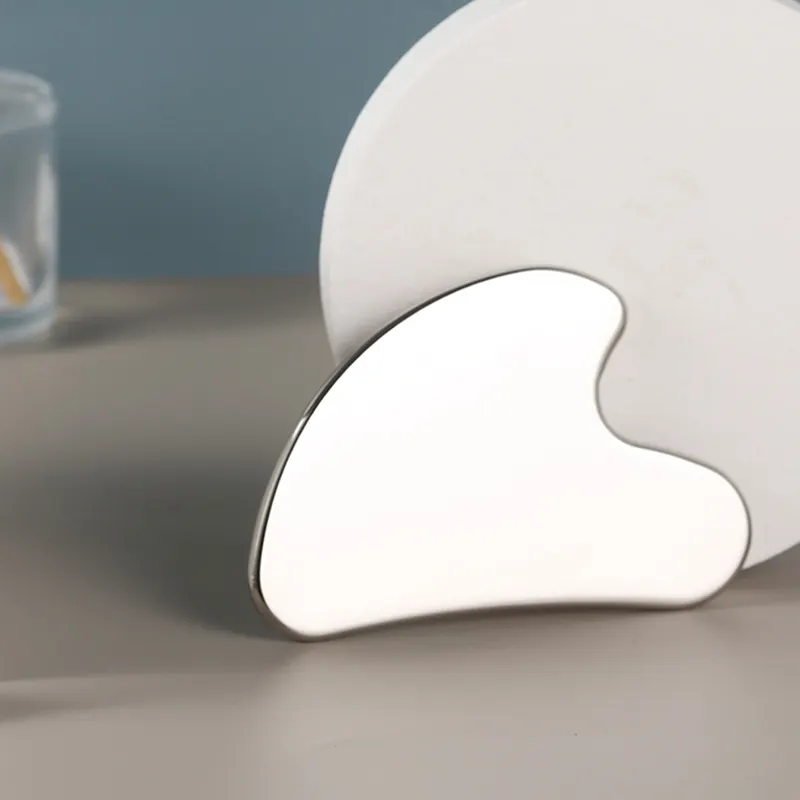
From gua sha stones to facial rollers, the tools behind modern skincare routines are undergoing a quiet materials transformation. Stainless steel has become the leading alloy for premium implementsnot only because it polishes well, but because it offers measurable advantages in hygiene, longevity, and daily ergonomics.
This article examines the technical decisions that determine whether a tool performs reliably over years of use: alloy chemistry, machining precision, surface finishing, and the quality standards that support them. It is intended for product designers, brand owners, and quality professionals seeking a technical basis for material and process selection. All material properties cited are consistent with ASTM A240/A240M and standard metallurgical references.
Material Selection: 304 vs. 316 Stainless Steel
Every premium skincare tool begins with an alloy choice that defines its corrosion resistance, mechanical behavior, and cost. Two austenitic grades dominate the industry: 304 and 316 stainless steel.
Type 304 Stainless Steel (18/8)
Type 304, often called 18/8 for its nominal composition of 18% chromium and 8% nickel, is the workhorse of the stainless steel family. Its austenitic structure provides excellent formability, making it well suited to stamping and deep drawing. Typical annealed properties (per ASTM A240/A240M and the ASM Metals Handbook) include:
- Hardness: approximately 88 HRB (Rockwell B)
- Tensile strength: approximately 515 MPa (minimum)
- Density: approximately 7.9 g/cm
- Thermal conductivity: approximately 16 W/(mK)
For tools used in moderate moisture conditionswhere the balance of performance and cost is critical304 offers dependable corrosion resistance and mechanical robustness.
Type 316 Stainless Steel
Type 316 adds 2.03.0% molybdenum to its chromiumnickel base (typically 1618% chromium and 1014% nickel). Molybdenum significantly improves resistance to pitting and crevice corrosion in chloride-rich environments. (Note: the alloying addition is 2.03.0%, not 2.3%; the latter figure is a common typographical error that should be avoided in technical documentation.) This makes 316 especially valuable for tools that:
- Are used in humid bathrooms or near salt-rich environments
- Are washed frequently or left wet between uses
- Come into contact with acidic skincare actives, such as vitamin C serums and alpha-hydroxy acids (AHAs)
For professional spa settings, high-end product lines, or users with sensitive skin, 316 is the more conservative specification. While both grades can be formulated to meet FDA 21 CFR food-contact requirements, 316 carries a higher material cost that is typically reflected in the tool's final price.
Practical Guidance for Grades
Regardless of grade, reputable suppliers should certify compliance with ASTM A240/A240M, the standard specification for chromium and chromiumnickel stainless steel plate, sheet, and strip. When reviewing supplier documentation, request the mill test certificate for each production lot and verify the actual chromium, nickel, and molybdenum concentrationsnot just the grade designation.
Precision Manufacturing: CNC Machining and Forming
Transforming stainless steel into smooth, ergonomically balanced tools requires manufacturing processes capable of micron-level precision. Two complementary approaches dominate: CNC machining for complex, three-dimensional geometries, and progressive stamping for high-volume flat components.
CNC Machining and Turning
CNC (Computer Numerical Control) machining uses computer-programmed cutting tools to remove material from solid stainless steel stock. For beauty tools, the critical advantage is the ability to produce consistent, intricately curved geometriesfrom the subtle arc of a gua sha edge to the polished recesses of a facial roller handle. Modern CNC centers routinely achieve tolerances of 0.01 mm, ensuring that every tool in a production run matches the original design intent.
CNC turning, a subset of this technology, excels at cylindrical components. Face roller handles, massage wand bodies, and derma roller barrels all benefit from the rotational symmetry that turning delivers. The process produces exact diameters and surface finishes that reduce post-processing requirements.
This precision directly affects the user experience. A facial roller whose handle is perfectly balanced, whose rolling head rotates without wobble, and whose gua sha edge glides without catching is the visible result of tight machining tolerances.
Stamping for Efficient High-Volume Production
While CNC machining is ideal for complex shapes and lower volumes, progressive die stamping excels at manufacturing flatter components at scale. Cosmetic spatulas, jar spatulas, and certain face tool handles are commonly stamped from stainless steel sheet in thicknesses ranging from 0.5 mm to 2.0 mm. Cold-rolled strip supplied for stamping is produced to the dimensional tolerances defined in standards such as ISO 9445, which governs thickness, width, and flatness variations.
Stamping offers three key advantages:
- Dimensional consistency across tens of thousands of units
- Reduced material waste through optimized nesting of parts
- Uniform edge quality when paired with proper secondary deburring
For brands balancing premium quality with accessible pricing, a hybrid workflowstamped blanks followed by CNC finishing where geometry demands itprovides an efficient compromise between speed and precision.
A Critical Process Note: Springback Compensation
One of the most common manufacturing pitfalls in stamping is elastic springback. After the die releases, the stainless steel partially returns to its original flat shape due to residual elasticity. This is not a defect in the material; it is an inherent property of austenitic stainless steel. For example, a 90 bend in a 1.0 mm thick 304 sheet commonly exhibits springback of 28, depending on bend radius and grain direction. Die geometries must therefore be over-bent or compensated by an amount determined through iterative production trials. A manufacturer that cannot demonstrate a structured approach to springback compensationideally with documented trial data and statistical process controlwill struggle to maintain consistent dimensional accuracy across large production runs.
Surface Engineering: Finishing for Performance and Aesthetics
A beauty tool's finish determines not only how it looks, but also how it performs and how hygienic it remains. Several surface treatments are commonly applied to stainless steel skincare tools, each with a distinct purpose.
Mechanical Polishing
The mirror-like gloss associated with premium tools is achieved through progressively finer abrasives, from coarse belts to micron-grade polishing compounds. A well-executed polish can reach a surface roughness of Ra 0.2 m. At this level of smoothness, the surface offers fewer microscopic crevices where residues and microorganisms can accumulatea meaningful advantage for tools that contact the face daily. Surface roughness is typically verified with a stylus profilometer in accordance with ISO 4287, using a cutoff length of 0.8 mm.
There is a quality caveat: if polishing is rushed or excessive pressure is applied, localized overheating can dull the surfacea condition known as burnishingand may even compromise corrosion resistance by disturbing the chromium oxide layer. Reputable manufacturers control polishing parameters carefully, often with documented spindle speed, pressure, and feed-rate limits, to avoid this failure mode.
Electropolishing
Electropolishing is an electrochemical process that removes a thin surface layer (typically 0.010.08 mm) through anodic dissolution. In practice, components are immersed in a heated phosphoricsulfuric acid electrolyte and subjected to direct current densities in the range of roughly 515 A/dm, with the exact recipe adjusted for each alloy grade and geometry. Electropolishing provides several advantages over mechanical polishing alone:
- Removes micro-burrs and embedded contaminants left from machining
- Produces surfaces smoother than many mechanical methods can achieveoften with Ra values below 0.1 m
- Enhances corrosion resistance by enriching the chromium oxide layer
- Creates a surface that is exceptionally easy to clean
For beauty tools, this translates to a product that feels remarkably smooth while resisting the buildup of skincare residuea critical hygiene factor. Electropolishing duration must be tailored to each component's geometry and prior machining history; a one-size-fits-all recipe will produce inconsistent results across complex shapes.
Passivation and PVD Coating
Passivation is a chemical treatment that removes free iron and iron compounds from the stainless steel surface, promoting a uniform chromium oxide layer. While stainless steel naturally forms a passive film, passivation accelerates the process for 304 and 316 grades, resulting in improved long-term corrosion resistance. For tools that will be exposed to acidic skincare formulations, passivation is strongly recommended.
One common misconception deserves correction: anodizing does not work on stainless steel the way it does on aluminum. Brands seeking custom colors typically turn instead to PVD (Physical Vapor Deposition) coating. PVD applies a thin, hard ceramic or metallic film to the surface, offering aesthetic optionsfrom gold-toned titanium nitride to matte-black diamond-like carbonwhile enhancing wear and scratch resistance. When applied correctly, PVD coatings preserve the hygienic properties of stainless steel while expanding design possibilities. Note that PVD-coated tools should be cleaned with non-abrasive methods to preserve the coating's integrity over time.
Ergonomics: Weight, Balance, and the Sensory Experience
The physical feel of a beauty toolits weight, balance, and texturedramatically shapes the user's perception of quality. Stainless steel's density of approximately 7.9 g/cm is more than twice that of aluminum (2.7 g/cm) and more than six times that of common plastics. This inherent heft is consistently associated with durability and luxury.
But weight alone is not sufficient; thoughtful design ensures that weight serves function. A well-designed stainless steel gua sha concentrates mass in the working edge to provide controlled pressure without requiring excessive force from the user. A face roller handle, by contrast, is often engineered with a lower mass distribution near the grip, reducing wrist strain during extended massage routines.
Thermal behavior also matters. Stainless steel's thermal conductivity of approximately 16 W/(mK) allows it to equilibrate with its environment. This explains why steel tools feel refreshingly cool after brief refrigerationa popular technique for reducing puffiness and soothing sensitive skin. The tactile signature of a well-finished stainless steel toolsmooth, cool, and substantialcreates an immediate impression of clinical quality and efficacy.
Designing for Balance: A Quantitative Note
For product designers, balance should not be left to intuition. A simple center-of-mass check at the design stage can prevent ergonomic failures:
- Create a 3D CAD model of the tool with accurate material density assigned.
- Use the mass-properties tool to locate the center of mass.
- For a gua sha, verify that the center of mass lies within the working edge region when the tool is held in a natural grip.
- For a roller handle, verify that the center of mass sits near the grip center, not the free end.
This analysis costs nothing but prevents costly mold or machining revisions. It is a hallmark of manufacturers that treat ergonomics as an engineering discipline rather than a stylistic afterthought.
Quality Assurance and Industry Standards
Manufacturers serving the premium skincare market must demonstrate more than surface excellence. Comprehensive quality assurance programs validate both performance and regulatory compliance.
Key Standards and Test Methods
Corrosion resistance is commonly validated by salt spray testing per ASTM B117. Finished tools are subjected to standardized saline environments for specified durationscommonly 24 to 72 hours for personal care instrumentsproviding accelerated predictions of real-world bathroom exposure. Results are typically reported as the number of hours completed without visible pitting, staining, or rust formation.
Hardness testing per ASTM E18 and surface roughness analysis per ISO 4287 guard against material inconsistencies introduced during heat treatment or cold working.
For companies seeking systemic quality management, ISO 9001:2015 certification provides a framework for consistent process control, documented traceability, and corrective action procedures. While ISO 9001 is not a product-specific standard, it is a strong indicator that a supplier has the organizational discipline to maintain quality across production runs.
A Note on Verification
Certifications should always be verified directly with suppliers. Third-party test reports and independent laboratory results provide significantly stronger evidence than self-declared compliance. Brands that request batch-level documentationincluding material certificates, surface analysis data, and salt spray resultsare best positioned to ensure consistent product quality.
When reviewing a material certificate, pay particular attention to:
- The heat number and its traceability to the specific production batch
- The actual chemical composition, not just the grade name
- Mechanical test results (tensile, yield, hardness) with the applicable test method cited
- The date of issue and the authorized signatory
Process Knowledge: The Hidden Differentiator
The behavior of stainless steel during stamping, machining, and finishing must be understood as an integrated system. Each stage creates constraints for the next: springback compensation shapes the stamped blank; machining parameters determine residual stress; polishing and passivation recipes set the final surface chemistry. A change in any variable propagates downstream.
Other process interactions deserve particular attention:
- Cold working during stamping can increase hardness and reduce ductility, affecting subsequent edge finishing.
- Machining-induced residual stresses can cause distortion when thin-walled tools are released from the fixture.
- Polishing pressure must be reduced in concave areas to avoid localized thinning or burnishing.
These are not lessons learned from a single production run. They accumulate over years of measurement and refinement across hundreds of tool geometries, and they represent one of the clearest distinctions between commodity manufacturing and consistently high-end production.
Conclusion
Stainless steel's dominance in premium skincare tool manufacturing is neither incidental nor purely aesthetic. It results from an ideal convergence of properties:
- Corrosion resistance that withstands daily exposure to moisture and active skincare compounds
- Mechanical strength that endures repeated use without deformation
- A density and thermal signature that elevate ergonomic comfort
- A surface chemistry that supports hygienic use and straightforward cleaning
From the selection of 304 versus 316 grade to the precision of CNC machining and the integrity of electropolished surfaces, each manufacturing decision contributes to a single goal: tools that perform exactly as the user expects, every time.
The distinction between a premium tool and a commodity tool rarely lies in a single feature. It lies in the accumulation of controlled variables: the correct alloy certificate, the compensated die geometry, the validated polishing recipe, the verified salt-spray result. When these are managed consistently, the result is a product that feels inevitableas if it could not have been made any other way.
As demand for evidence-backed product quality continues to grow, manufacturers who maintain rigorous process controlfrom alloy traceability to final surface verificationwill define the standard for the next generation of skincare instruments.
References
- ASTM International. A240/A240M Standard Specification for Chromium and Chromium-Nickel Stainless Steel Plate, Sheet, and Strip for Pressure Vessels and for General Applications. West Conshohocken, PA.
- ASTM International. B117 Standard Practice for Operating Salt Spray (Fog) Apparatus. West Conshohocken, PA.
- ASTM International. E18 Standard Test Methods for Rockwell Hardness of Metallic Materials. West Conshohocken, PA.
- U.S. Food and Drug Administration. 21 CFR Parts 174178: Indirect Food Additives. Code of Federal Regulations.
- ASM International. ASM Metals Handbook, Vol. 1: Properties and Selection: Irons, Steels, and High-Performance Alloys. Materials Park, OH.
- International Organization for Standardization. ISO 9001:2015 Quality Management Systems Requirements. Geneva.
- International Organization for Standardization. ISO 9445:2017 Continuously cold-rolled stainless steel strip, sheet and plate Tolerances on dimensions and form. Geneva.
- International Organization for Standardization. ISO 4287:2010 Geometrical Product Specifications (GPS) Surface texture: Profile method Terms, definitions and surface texture parameters. Geneva.
Table of Contents
GET IN TOUCH WITH Us