Please fill out the form below to request a quote or to request more information about us. please be as detailed as possible in your message, and we will get back to you as soon as possible with a response. we're ready to start working on your new project, contact us now to get started.
Yingshang-OEM & ODM CNC Machining Services Manufacturer Provide CNC Machining Parts & Skincare Tools.
What Makes A High-Quality Face Roller For Private Label Brands?
2026-10-22
YINGSHANG
13
How to specify materials, dimensions, surface finish, movement, assembly, and final inspection for a product that feels premium and performs reliably.
Face rollers have become a staple in modern skincare routines, but the market is crowded with products that look similar and make similar claims. For private label brands, the real differentiator is not a vague promise of radiant skin but the measurable quality of the tool itself: how it feels in the hand, how smoothly it glides, how durable it is, and how consistently it can be manufactured at scale.
This guide moves beyond subjective marketing language and focuses on the engineering and quality-control factors that define a superior face roller. It covers handle ergonomics, roller head materials, movement mechanisms, assembly tolerances, and finished-product inspection. The goal is to help private label brands create a face roller that feels exceptional, performs reliably, and earns consumer trust.
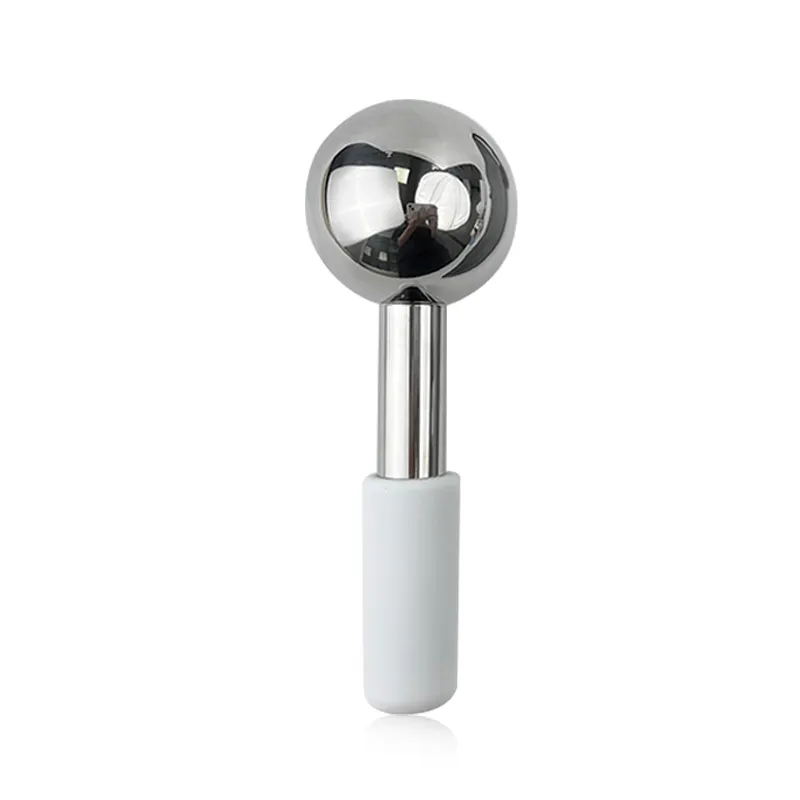
Handle Ergonomics and In-Hand Feel
A face roller is a tactile product. Before consumers evaluate its skin benefits, they notice its weight, balance, grip, and finish. A well-designed handle should feel secure without being heavy, and it should allow precise control across the forehead, cheeks, jawline, and under-eye area.
Key dimensional targets
These ranges are not arbitrary. They reflect common ergonomic requirements for hand-held skincare tools. A handle that is too short forces awkward wrist angles; one that is too long reduces precision. A roller head that is too large may not reach the under-eye area comfortably, while one that is too small may require excessive passes over the skin.
Material consistency
Handle materials should be chosen for durability, weight, cleanability, and brand positioning. Common options include:
- 304 or 316 stainless steel: Durable, corrosion-resistant, easy to clean, and capable of retaining cool temperatures for a soothing effect.
- Bamboo or sealed wood: Organic appearance for eco-conscious lines; requires a sealed finish to prevent moisture damage and bacterial growth.
- ABS, PC, or recycled plastics: Lightweight, cost-effective, and available in custom colors; quality depends on grade and finish.
- Silicone overmolds: Soft-touch grip with good chemical resistance; must be skin-safe and non-tacky.
Material consistency across batches is critical. Color variation, density differences, or surface defects can make a private label product feel inconsistent, even if the design is sound.
Surface finish
The handle should be free of burrs, sharp edges, and mold lines. For metal handles, a polished or brushed finish with Ra 0.4 m is a practical target. For wood or bamboo, a sealed, smooth coating is essential. For plastic, a matte or soft-touch finish can improve grip without feeling cheap.
Coatings must be non-toxic, hypoallergenic where possible, and compliant with relevant regulations such as RoHS and REACH. If the product is marketed for sensitive skin, material safety documentation should be available from the supplier.
Roller Head Materials: Choosing the Right Surface
The roller head is the part that touches the skin. Its material affects glide, thermal behavior, durability, cleaning, and perceived luxury.
Natural stone: jade and rose quartz
Jade and rose quartz remain popular because they feel cool, look premium, and have a long history in beauty rituals. However, not all stone is equal.
Stone roller heads should be polished to a smooth finish, typically Ra 0.2 m, to minimize friction and irritation. They should be free of sharp edges and structural defects. Because natural stone varies, brands should request batch photos or pre-production samples before approving mass production.
Stone heads should not be frozen or exposed to extreme temperature changes. Chilling in a refrigerator is generally sufficient for a cooling effect; freezing can weaken the stone and cause cracks.
Metal roller heads
Stainless steel and brass are excellent alternatives for brands seeking durability and a modern aesthetic.
- 304 stainless steel: Good corrosion resistance for general skincare use.
- 316 stainless steel: Superior corrosion resistance, especially for products exposed to moisture or cleaning agents.
- Brass with plating: Attractive gold-tone finish; plating must be uniform and wear-resistant.
Metal heads can retain cool temperatures well, making them suitable for cooling massage. They should be polished to a smooth finish and inspected for plating defects, pitting, or sharp edges. Metal rollers are generally easier to clean than porous stone, but they should still be wiped dry after use.
Silicone and synthetic roller heads
Silicone rollers appeal to vegan, cruelty-free, and sensitive-skin markets. They are soft, flexible, easy to clean, and can be produced in custom colors.
Key specifications include:
- Shore A hardness: 3050 for a gentle, flexible feel.
- Non-porous surface: Resists bacterial buildup and is easy to sanitize.
- Chemical compliance: RoHS, REACH, and skin-contact safety documentation.
- Durability: Resistance to tearing and deformation after repeated use.
Silicone rollers may not provide the same cooling effect as stone or metal, but they offer a distinct gentle massage experience. They are also less likely to break if dropped.
Roller Movement and Bearing Quality
A face rollers movement is one of the clearest indicators of manufacturing quality. It should rotate smoothly, quietly, and without wobbling or sticking.
Bearing and axle specifications
High-quality face rollers typically use one of the following:
- Precision miniature bearings: Such as 693ZZ or equivalent, for smooth rotation and low friction.
- Nylon or PTFE bushings: Lower cost, suitable for lighter use, but may wear faster.
- Metal axle with polished shaft: Must be straight, corrosion-resistant, and securely mounted.
Useful measurable targets include:
These specifications should be verified during sampling and production. A roller that spins freely but feels loose is not high quality; a roller that is too tight may drag on the skin. The ideal movement is smooth, controlled, and silent.
Assembly tolerances
The handle, yoke, axle, bearings, and roller head must fit together precisely. Poor assembly can cause misalignment, noise, wobble, or premature failure.
Typical assembly tolerances include:
- Handle-to-yoke alignment: 0.10 mm
- Bearing seat diameter: 0.05 mm
- Roller head gap: 0.15 mm
- Axle perpendicularity: 0.05 mm
Components should be assembled with the correct press-fit or fastening method. Adhesives, if used, must be skin-safe, durable, and resistant to cleaning agents. Threaded inserts should be tested for pull-out strength. Every unit should be checked for secure connections before packaging.
Finished Product Quality Control
Quality control should be built into every stage of production, not added at the end. For private label brands, a documented QC process is essential for consistent product quality and consumer safety.
Incoming material inspection
- Verify stone color, clarity, and freedom from cracks.
- Check metal grade certificates and corrosion resistance.
- Confirm silicone hardness, color, and skin-contact compliance.
- Measure incoming dimensions against approved samples.
In-process inspection
- Monitor CNC machining tolerances for handles and yokes.
- Inspect polishing and surface finish after each finishing step.
- Test bearing press-fit and rotation after assembly.
- Check for burrs, sharp edges, and mold defects.
Final inspection checklist
A rigorous final inspection should include:
Sampling should follow a recognized standard such as ISO 2859-1, with AQL levels chosen according to the brands risk tolerance. For many consumer skincare tools, a major defect AQL of 1.0 and minor defect AQL of 2.5 is a reasonable starting point, but brands should confirm requirements with their manufacturer.
Documentation and traceability
Every production batch should be traceable. Useful records include:
- Material certificates
- Approved golden samples
- Dimensional inspection reports
- Bearing and movement test results
- Final inspection reports
- Packaging and labeling checks
This documentation helps brands respond quickly if a quality issue arises and demonstrates due diligence to retailers and consumers.
Private Label Launch Checklist
Before committing to mass production, private label brands should complete a structured validation process.
- Define the product brief. Specify target user, material, dimensions, weight, finish, color, and packaging.
- Request pre-production samples. Evaluate feel, balance, glide, noise, and visual quality.
- Confirm material compliance. Obtain RoHS, REACH, and skin-contact safety documentation where applicable.
- Approve golden samples. Keep signed samples for production reference.
- Run a pilot batch. Inspect 100500 units using the final QC checklist.
- Validate claims. Avoid medical claims unless supported by clinical evidence. Frame benefits as temporary de-puffing, relaxation, or enhanced product application through massage.
- Review packaging and labeling. Ensure instructions include cleaning, storage, and safety warnings.
- Establish ongoing QC. Agree on AQL levels, inspection frequency, and corrective action procedures.
Conclusion
A high-quality face roller is not defined by marketing language alone. It is defined by measurable decisions: handle dimensions that fit the hand, materials that are consistent and safe, surface finishes that glide smoothly, bearings that rotate without wobble, assembly tolerances that prevent failure, and final inspections that catch defects before shipment.
For private label brands, these factors create a product that feels premium, performs reliably, and supports long-term brand trust. By specifying quality in engineering terms rather than subjective claims, brands can stand out in a competitive skincare marketand deliver a face roller that consumers are more likely to keep using, recommend, and repurchase.
Table of Contents
GET IN TOUCH WITH Us
A professional face roller factory should offer stable production, reliable quality control or practical customization and clear support from sampling through repeat orders. This guide will help you be aware of what you should look for before you make a final decision on a long-term manufacturing partner. Read on to learn more.